

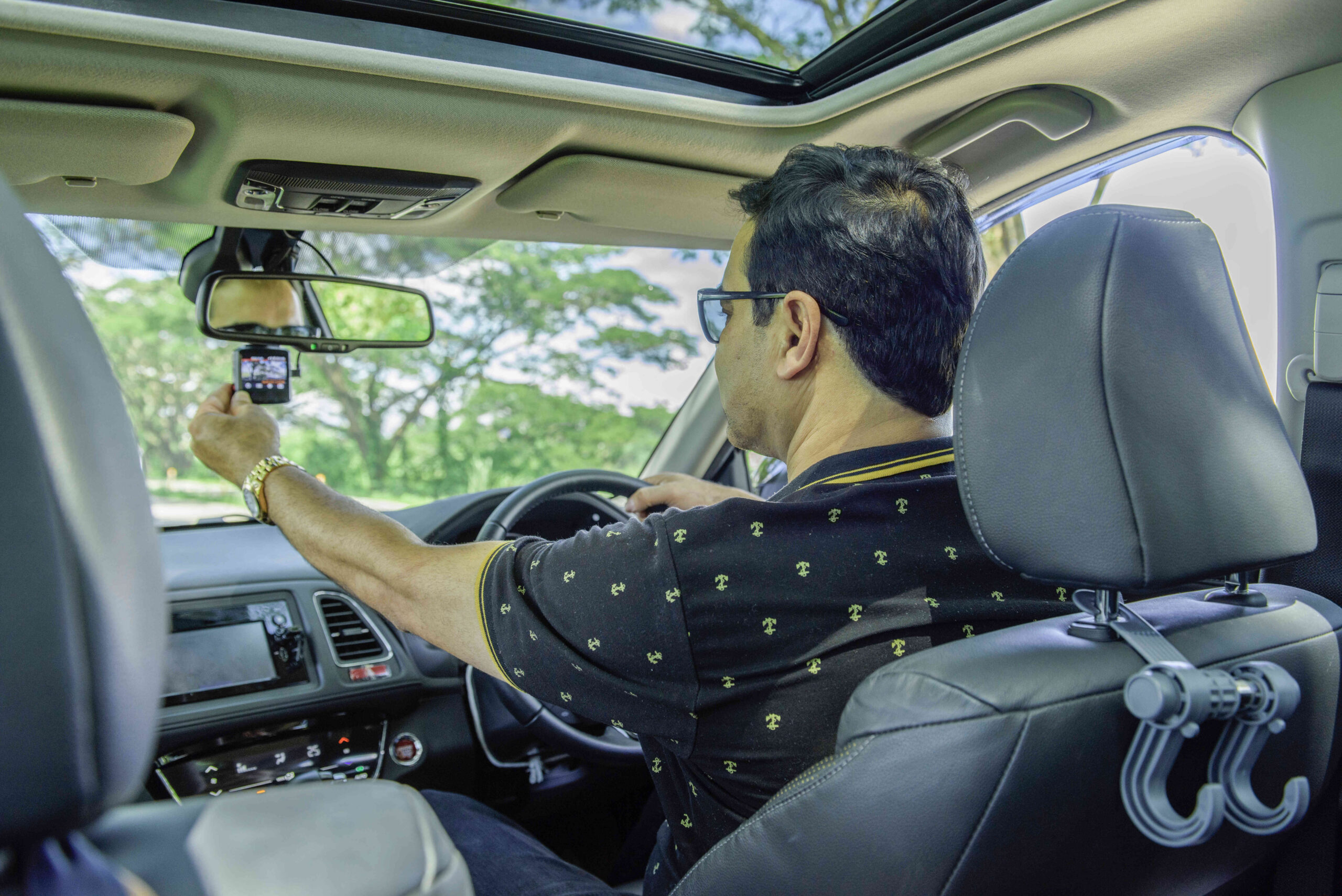
Dashcams have moved from a niche accessory favored by a small number of enthusiasts and rideshare drivers into a mainstream piece of vehicle equipment, and that shift has meaningfully changed how a growing share of auto insurance claims actually get resolved. What used to come down to two conflicting accounts of an accident, backed by whatever physical evidence happened to survive at the scene, increasingly comes down to actual recorded footage that removes much of the ambiguity fault determination has historically relied on. Understanding how insurers actually treat this footage, where it helps, where it creates complications, and what it means for a driver’s broader risk profile is worth examining closely before assuming a dashcam is a simple, unambiguous upgrade to have installed.
Why Fault Disputes Have Historically Been So Difficult to Resolve
Before dashcam footage became common, insurers determining fault after an accident relied heavily on driver statements, official police reports, physical evidence at the scene such as skid marks and vehicle damage patterns, and occasionally independent witness accounts. Each of these sources carries real limitations. Driver statements are inherently self-interested and frequently conflict directly with the other driver’s account. Police reports, while generally more objective, are based on an officer’s reconstruction after the fact rather than direct observation of the collision itself, and officers are not always present quickly enough to observe transient evidence like exact vehicle positioning at the moment of impact. Independent witnesses, when they exist at all, often have imperfect vantage points and memories that are reconstructed rather than precisely observed.
This combination of imperfect evidence sources is precisely why so many insurance claims historically came down to a comparative negligence determination based on incomplete information, with insurers sometimes splitting fault percentages between both drivers simply because neither account could be definitively verified against the other. Recorded footage changes this dynamic considerably by providing something the claims process has historically lacked: a direct, largely objective record of what actually happened in the moments before and during a collision.
How Insurers Actually Use Dashcam Footage During a Claim
When footage is available and submitted as part of a claim, insurers generally treat it as a significant piece of evidence, though not always as an automatically decisive one. Claims adjusters evaluate footage alongside other available evidence, and the footage’s usefulness depends considerably on what it actually captures. Footage that clearly shows the moments immediately before impact, including the positioning, speed, and signaling behavior of both vehicles, tends to be highly persuasive in establishing or ruling out fault. Footage that only captures the aftermath of a collision, without the lead-up to impact, is far less useful for fault determination even though it may still help document the extent of damage or the immediate condition of the scene.
Insurers also pay attention to whether footage is continuous and unedited, since footage with gaps or evidence of selective editing understandably raises questions about whether it presents a complete and accurate picture of events. Most dashcams designed for insurance purposes record continuously in looping segments, automatically preserving footage around the moment of an impact detected through built-in accelerometers, which helps establish that the footage represents an unaltered record rather than a selectively captured clip.
It’s worth noting that having footage does not eliminate the standard claims process entirely. Insurers still typically request the footage as one component of a broader evidence review, and a driver’s own insurer, the other party’s insurer, or both may request access to it depending on how the claim unfolds. Footage that clearly supports one driver’s account tends to accelerate the claims process considerably, often reducing the time and back-and-forth typically required when fault is genuinely disputed.
Dashcam Footage as a Meaningful Deterrent to Fraudulent Claims
Beyond its usefulness in genuine accidents, dashcam footage has become an increasingly important tool in identifying and preventing insurance fraud, particularly staged accident schemes that have historically been difficult to detect through other means. Certain fraud patterns, including drivers who intentionally brake suddenly in front of another vehicle to induce a rear-end collision, or staged accidents involving multiple coordinated vehicles, rely heavily on the absence of objective evidence to support a fraudulent narrative about how the collision occurred.
Dashcam footage that captures a suspicious pattern, such as a vehicle braking without any apparent traffic reason to do so, or evidence of a vehicle that appears to have been already damaged before a claimed collision, can be decisive in identifying fraudulent claims that would otherwise be difficult to dispute. Some insurers have specifically noted the growing role dashcam footage plays in fraud investigation units, and a small but meaningful number of fraud rings have been identified and prosecuted in part because a dashcam happened to capture footage the perpetrators didn’t anticipate would exist.
For individual drivers, this fraud-deterrence value translates into genuine protection against the specific and unfortunately common scenario of being targeted by a staged accident scheme, since footage that clearly documents an unusual or suspicious sequence of events can prevent a driver from being held liable for a collision that was deliberately engineered by the other party.
Where Dashcam Footage Can Complicate Rather Than Simplify a Claim
Despite the genuine benefits, dashcam footage is not universally advantageous, and drivers should understand the scenarios where it can complicate a claim rather than resolve it in their favor. Footage that clearly shows a driver’s own traffic violation, distracted driving, or other fault-contributing behavior in the moments before a collision can work directly against the driver who installed the camera, since insurers reviewing footage submitted to support a claim are also evaluating it for evidence that might undermine that same claim.
This means drivers should understand that submitting dashcam footage is not a selective process where only favorable footage gets disclosed. Once footage becomes part of a claim, insurers and, in the event of litigation, opposing legal counsel may have the ability to request the complete footage rather than a curated excerpt, and attempting to submit only a favorable segment while withholding surrounding context that complicates the picture can itself raise credibility concerns that damage a driver’s position more than having no footage at all would have.
There is also a privacy dimension worth understanding. Dashcams that record continuously capture footage of other vehicles, pedestrians, and license plates as a routine byproduct of normal driving, and certain jurisdictions have specific regulations around recording audio inside a vehicle, particularly relevant for dashcams that also capture cabin audio in rideshare or commercial driving contexts. Drivers should have a basic understanding of their state’s regulations around recording, particularly audio recording, to avoid inadvertent legal complications separate from the insurance claims process itself.
Whether a Dashcam Actually Affects Insurance Premiums Directly
A common question among drivers considering a dashcam purchase is whether simply having one installed leads to a direct premium discount, and the honest answer is that this varies considerably by insurer and is far less universal than drivers often assume. Some insurers offer modest discounts for dashcam installation, generally as part of a broader safe-driving or technology discount category, while many others do not offer any direct premium reduction for the device itself, reserving discounts instead for telematics programs that actively monitor and report driving behavior rather than passive recording devices that only matter if an incident actually occurs.
The more meaningful financial benefit from a dashcam tends to come not from a direct premium discount but from the practical outcomes of specific claims, faster resolution, reduced likelihood of being assigned fault in a disputed accident, and protection against fraudulent claims that would otherwise increase a driver’s claims history and subsequent premiums. Drivers evaluating whether a dashcam is worth the investment should weigh these claims-related benefits more heavily than any direct discount, since the discount, where available at all, is typically modest compared to the potential cost of an unfavorable fault determination in a genuinely disputed accident.
Choosing Equipment and Practices That Maximize Insurance Value
For drivers specifically interested in the insurance-related benefits of a dashcam, certain equipment characteristics matter more than others. A camera with continuous recording, automatic incident detection and footage preservation, adequate resolution to clearly capture license plates and road markings, and a wide enough field of view to capture the full context of an intersection or lane change tends to produce footage that’s genuinely useful during a claims dispute, as opposed to lower-quality footage that fails to clearly resolve the ambiguous details that actually determine fault.
Regularly confirming that footage is being saved correctly, and understanding how to quickly export and preserve footage immediately following an incident before it gets overwritten by continuous looping recording, is equally important, since a dashcam that was recording but whose footage wasn’t properly saved provides no more benefit during a claims dispute than not having one installed at all. For drivers who want their dashcam investment to genuinely translate into stronger protection during a claim, treating footage preservation as an active habit rather than an assumed automatic process is the detail most likely to determine whether that footage is actually available and usable when it matters most.